For educators, counselors and youth leaders

Practical tools for the conversations that shape judgment.

Age-respectful SEL and life-skills resources for grades 8-12—designed for thoughtful participation, not forced disclosure.

New decision guide

Conflict resolution is more than “talk it out.”

Give teens a clear way to choose clarification, repair, a boundary, changed access, distance, or adult support using the evidence.

Read the New Guide
Includes a classroom activity

Choose the next move

  • Facts and contextSeparate behavior from assumptions about motives.
  • Pattern and purposeIdentify what needs to change.
  • Revisable decisionsUpdate the choice when new information appears.
Educator guide

What do older students actually need from a friendship lesson?

Build lesson plans around behavioral evidence, earned trust, realistic boundary language, conflict choices, digital decisions, and privacy-respecting reflection.

Read the Guide
Built for high school

Judgment, not slogans

  • Believable ambiguityScenarios that require reasoning rather than an obvious answer.
  • Proportionate choicesRepair, boundaries, changed access, distance, or support.
  • Protected privacyPractice without forced personal disclosure.
Activity guide

Friendship activities that go deeper than icebreakers.

Explore eight age-respectful formats for practicing behavioral evidence, boundaries, repair, access decisions, digital judgment, and private reflection.

Read the Activity Guide
Practice formats

Thinking that transfers

  • Evidence sortingSeparate observable facts, interpretations, patterns, and missing context.
  • Scenario decisionsChoose repair, boundaries, changed access, distance, or support.
  • Private reflectionTransfer the skill without requiring personal disclosure.
Start free

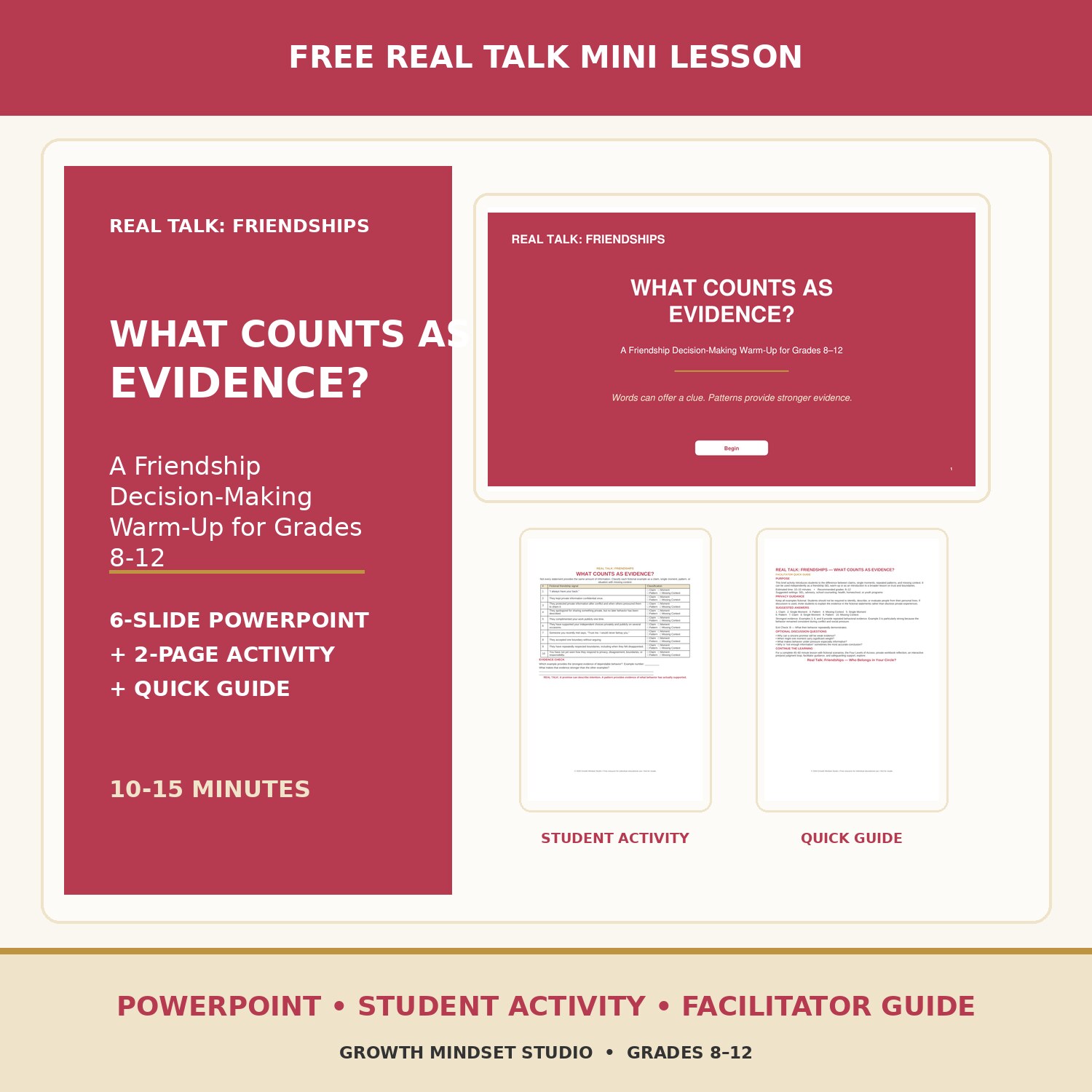
Introduce the thinking before teaching the full framework

Use the free mini lesson as a short stand-alone warm-up or as the first step into deeper friendship work.

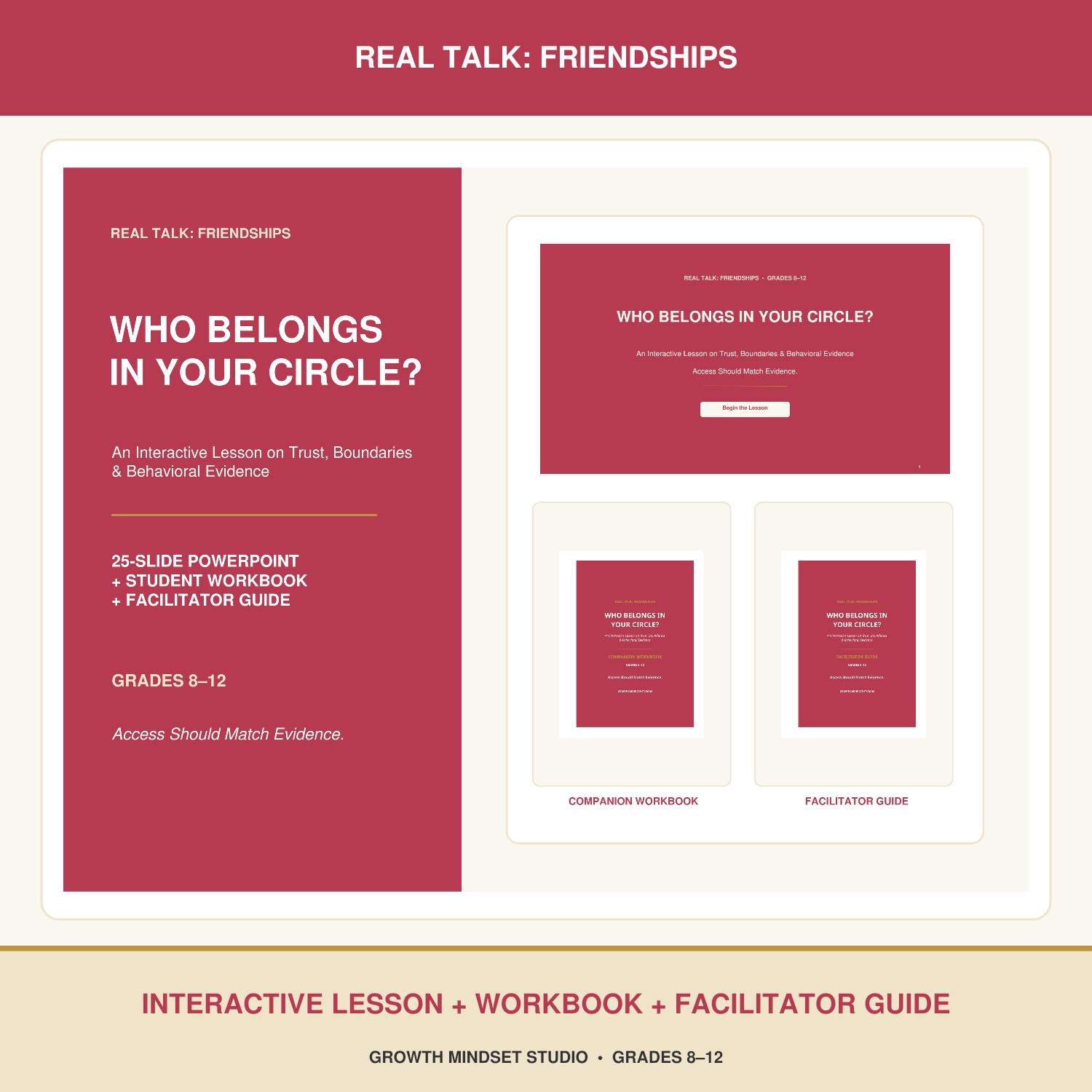
Real Talk Friendships Who Belongs in Your Circle complete lesson cover

Who Belongs in Your Circle?

Continue from recognizing evidence to deciding how much trust, information, influence, and emotional access behavior supports.

  • 25-slide interactive PowerPoint
  • 9-page student workbook
  • Comprehensive facilitator guide
  • Approximately 45 minutes
View the Complete Lesson on TPT
Boundary guide

Show students what friendship boundaries actually sound like.

Use realistic scripts and reflection prompts for emotional, conversational, digital, time, and access boundaries—without teaching avoidance, forced disclosure, or one-strike thinking.

Read the Boundary Guide
Inside the guide

Clarity students can practice

  • Five boundary typesConnect limits to the part of life they protect.
  • Realistic languageScripts teens could use without sounding rehearsed.
  • Response evidenceDistinguish disappointment from pressure or retaliation.
Educator guide

What should teen friendship worksheets actually teach?

Move beyond manners-only activities. Learn how to evaluate resources for age-respectful scenarios, behavioral evidence, boundaries, accountability, conflict repair, and decisions that transfer beyond the page.

Read the Guide
Practical criteria

Choose stronger activities

  • Realistic complexityQuestions that allow context and defensible reasoning.
  • Behavior over labelsPatterns students can identify without diagnosing people.
  • A usable next stepBoundaries, repair, access changes, or appropriate support.

Built for serious topics without making the room feel clinical.

Real Talk lessons use mature design, fictional scenarios, private reflection, and clear facilitator support so students can practice judgment without being required to share personal experiences.

Read About Our Approach